
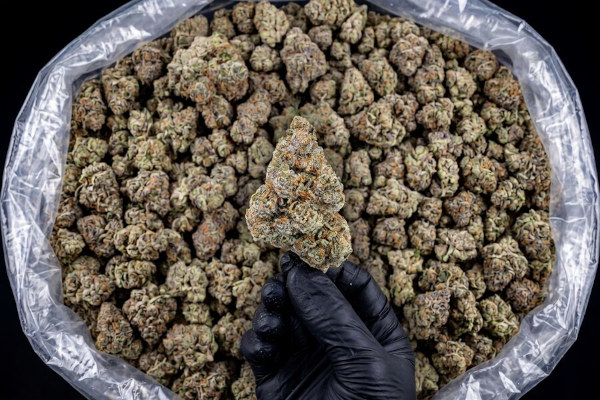
How much weed does one plant yield? It’s one of the first questions new growers ask, and experienced growers keep revisiting it every time they switch strains or setups. With so many factors involved, the honest answer is: it depends.
A cannabis plant grown under minimal light in a cramped space will produce very differently from one given the right environment, the right genetics, and some deliberate canopy management.
This guide breaks down what actually drives cannabis plant yield, what you can realistically expect indoors and outdoors, and the specific adjustments that push weed plants toward heavier harvests.
What Does “Yield” Actually Mean?
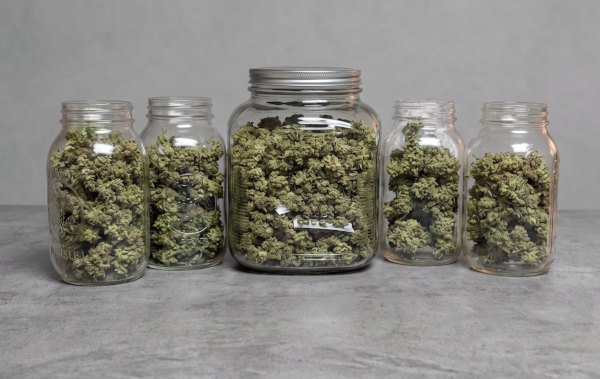
Yield refers to the dry weight of the harvested buds from a cannabis plant, not the whole plant and not the wet weight straight off the stem.
Dried buds lose a significant portion of their mass during the drying and curing process, so the number you end up with at the end of the harvest process is lower than the raw wet weight. That’s the figure that matters when calculating how much weed you actually have.
Most growers measure yield in ounces per plant for smaller harvests, or in ounces per square foot for indoor setups where canopy coverage matters as much as plant count.
How Much Weed Does One Cannabis Plant Yield?
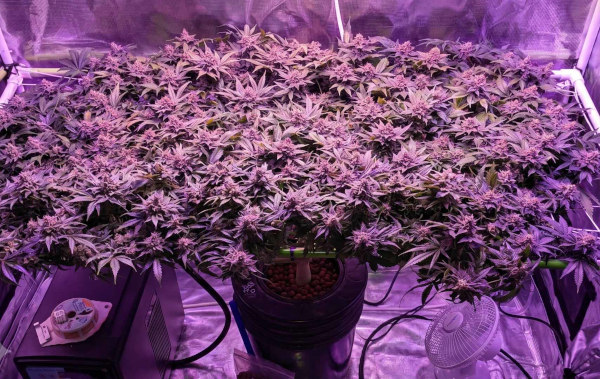
There’s no single number here, but there are useful ranges based on the growing environment. These assume a healthy plant with decent genetics and reasonable care. Understanding how genetics influence cannabis yield is key here, since strain selection plays a major role in how much cannabis you actually take home. In practice, final harvests usually fall somewhere within these general ballparks:
| Setup | Typical yield per plant |
|---|---|
| Indoor (average conditions) | Around ¼ lb of dried buds |
| Indoor (optimized setup) | Up to ½ lb or more |
| Outdoor plant (average season) | Around ½ lb of dried buds |
| Outdoor plant (strong season, large canopy) | ½ lb to over 1 lb |
| Autoflower (indoor or outdoor) | Light to average; lower ceiling than photoperiod |
These are general estimates. A plant that runs into nutrient problems, pest pressure, or light stress will come in below these ranges. One that’s been trained well, fed consistently, and grown under strong light can exceed them.
Factors that Affect Cannabis Plant Yield
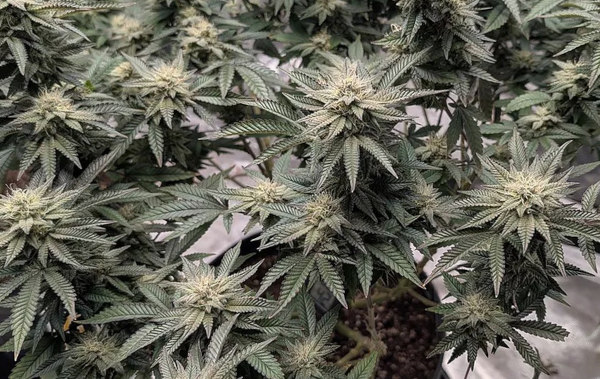
Many factors affect how much a single weed plant produces. Understanding which ones play a significant role gives you a clearer picture of where to focus your effort.
Genetics and Strain Selection
Genetics set the yield ceiling before a single seed goes into the ground. Some cannabis strains are bred for heavy, dense bud production; others prioritize potency, speed, or flavor over raw weight.
Indica plants tend to stay compact with dense, resinous buds, while sativa-dominant strains can stretch taller and develop a larger canopy, which means more bud sites when managed well.
Starting with proven, high-yielding genetics gives growers a much stronger foundation than relying on unknown or unstable seed stock. The best results come from matching the strain’s growth habits, flowering time, and size potential to your available space and growing conditions.
Indoor Growing vs. Outdoor Growing
Growing indoors gives you full control over light, temperature, humidity, and feeding. That control comes at a cost: space is limited, and light intensity drops fast as distance from the canopy increases.
Indoor growers working in a grow tent are often working with a defined footprint, which naturally caps how large a cannabis plant can get and how many grams per plant they can realistically achieve.
An outdoor plant in the ground with full sun exposure can develop a significantly larger canopy than anything possible in a grow tent, which is why outdoor cannabis plant yield can run well above indoor figures during a strong season. The trade-off is that outdoor growers are at the mercy of local climate, seasonal light availability, and weather.
Photoperiod Plants vs. Autoflowering Plants
Photoperiod plants flower in response to changes in the light cycle, typically a shift to 12 hours of light per day. They can be kept in vegetative growth for as long as the grower wants, which means more time to build canopy, more bud sites, and more potential grams per plant at harvest. That time investment usually translates to heavier yields.
Autoflowering plants flower based on age rather than light schedule, finishing faster but with a lower yield ceiling. For growers who want multiple harvests in a season or are working in a confined space, autos are a practical choice. For raw one-plant yield, photoperiod genetics typically pulls ahead.
Grow Light and Light Coverage
Light is the engine behind cannabis cultivation. The amount of light energy a plant receives is directly tied to how much it can produce. Indoors, the type and strength of the grow light are directly related to plant yield. A low-wattage or poorly positioned grow light results in reduced light penetration into the canopy, fewer productive bud sites, and a lower total harvest.
The light exposure each plant receives depends on its position under the grow light and how the canopy is managed. Making sure small plants and lower branches get enough light, rather than letting the main cola shade everything else, makes a measurable difference in total yield.
Modern LED grow lights have significantly improved light-energy efficiency compared to older HPS setups, delivering higher output with lower heat.
Growing Medium
The growing medium affects how efficiently roots absorb water and nutrients, which directly influences plant growth rate and bud development. The three main options each have trade-offs:
- Soil is forgiving for beginners. A high-quality soil mix formulated for cannabis provides a buffered nutrient environment that’s harder to overfeed. Growth tends to be slightly slower than in hydro systems, but it’s generally easier to manage, particularly for first grows.
- Coco coir sits between soil and hydroponics. It holds moisture well but drains fast, encouraging strong root growth and faster vegetative development. It rewards active feeding management and can support above-average yields when dialed in.
- Hydroponics delivers nutrients directly to the roots in a water-based system. With no medium to buffer errors, it demands more attention, but optimized hydro grows can push potential yields higher than soil setups under the same lighting.
Growing Conditions: Temperature, Humidity, and Airflow
Growing conditions play a significant role throughout the entire life cycle.Cannabis plants grow best when temperatures stay between 68–85°F during the light period, dropping slightly cooler at lights-off. Humidity around 55–65% supports healthy vegetative growth, pulling it below 50% (targeting closer to 45%) in late flower, when dense bud sites are most vulnerable to mold.
Good airflow matters just as much as temperature. A grow tent without adequate circulation can develop hot spots and humidity pockets that stall plant growth and invite problems in the final weeks. Oscillating fans and a properly sized inline fan are basics that promote growth without adding complexity.
Nutrients and Feeding
The right nutrients, at the right time, keep the plant building toward maximum yield. Understanding nutrients and cannabis plant growth helps explain why balanced feeding throughout the cycle supports steady development at every stage.
Nitrogen-heavy feeding drives vegetative growth, while phosphorus and potassium become more important during flowering to support bud density and overall flower production at harvest.
Under-feeding limits the plant’s ability to build biomass. Over-feeding can create nutrient lockout and stress that disrupts absorption. Both issues reduce yield potential and can negatively affect final bud quality.
Growing Techniques and Training
Canopy management is one of the most underused tools for increasing yield per weed plant. The goal of most growing techniques is to expose more bud sites to direct light rather than letting lower growth sit in shadow.
Low stress training (LST) involves gently bending and tying branches outward during vegetative growth to encourage a flatter, wider canopy. Topping removes the main growing tip early on, encouraging the plant to develop multiple main colas instead of one. Both take practice, but the impact on grams per plant at harvest is real and consistent across indoor setups.
How Many Plants Do You Need?
The number of plants you would need per harvest comes down to how much weed you use and your legal plant limit.
A single indoor plant yields around ¼ lb of dried buds. At one gram per day, that one weed plant covers nearly four months. At half a gram a day, it stretches to around eight months.
Growing indoors allows for a continuous cycle — harvest one plant, start the next. Outdoor growers typically get one harvest per season, so factoring in the size of each outdoor plant matters when deciding how many to run.
Most US states allow six plants per person for home cultivation, giving growers room to experiment with different strains and growing techniques without putting all their hopes on one plant.
Getting the Most From Every Cannabis Plant
Cannabis plant yield isn’t fixed. It’s the result of decisions stacked from seed selection through to the final days before harvest. Genetics set the ceiling, but growing conditions, light coverage, growing medium, balanced nutrients, and canopy training all determine how close you get to it.
Start with quality seeds that match your space, give the plant what it needs at each growth stage, and you’ll have a much clearer, more satisfying answer to how much weed one plant can produce, measured at your own harvest.
FAQs
How Much Weed Does One Cannabis Plant Yield on Average?
A healthy cannabis plant typically produces around ¼ lb of dried buds indoors under average conditions, and around ½ lb outdoors with a good growing season. Optimized setups and high-yielding strains can push those figures higher, while poor conditions bring them down.
How Many Grams per Plant Can You Expect From an Autoflower?
Autoflowering plants typically produce fewer grams per plant than photoperiod strains under the same conditions. Most autos land in the light-to-average yield range. Their advantage is speed and the ability to run multiple harvests per season rather than peak grams per plant.
Does the Grow Light Make a Big Difference in Cannabis Plant Yield?
Yes, significantly. Light is the single biggest driver of yield when growing indoors. The more light energy a plant receives, and the better that light penetrates the canopy, the more it can produce.
What Growing Techniques Increase Yield the Most?
Low-stress training and topping are two of the most accessible and effective growing techniques for increasing yield from one weed plant. Both work by expanding the canopy so more bud sites receive direct light, rather than competing in the shadow of a single dominant cola.
Does Growing Indoors vs. Outdoors Affect How Much Weed One Plant Produces?
Yes! Outdoor plants can grow much larger canopies than indoor setups allow, which is why an outdoor plant with a strong season can produce significantly more than the same strain grown in a grow tent.